An availability-led booking concept
The research described permission, manoeuvring and vehicle-condition concerns that availability alone could not answer.
Parking / Research-informed design
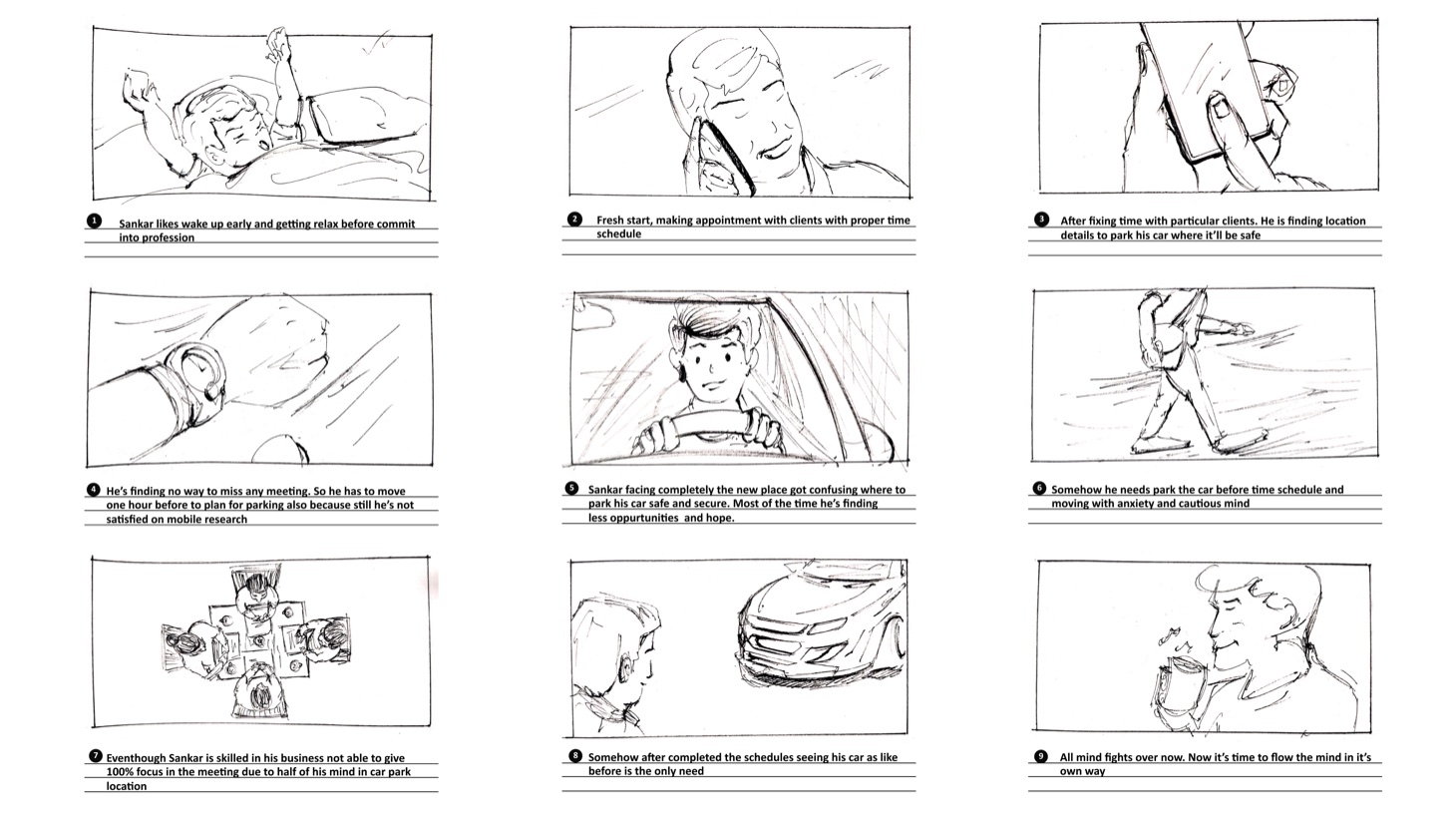
Revisiting a team parking project revealed a mismatch: the early model focused on getting through the gate, while interview accounts also described the space immediately around the car.
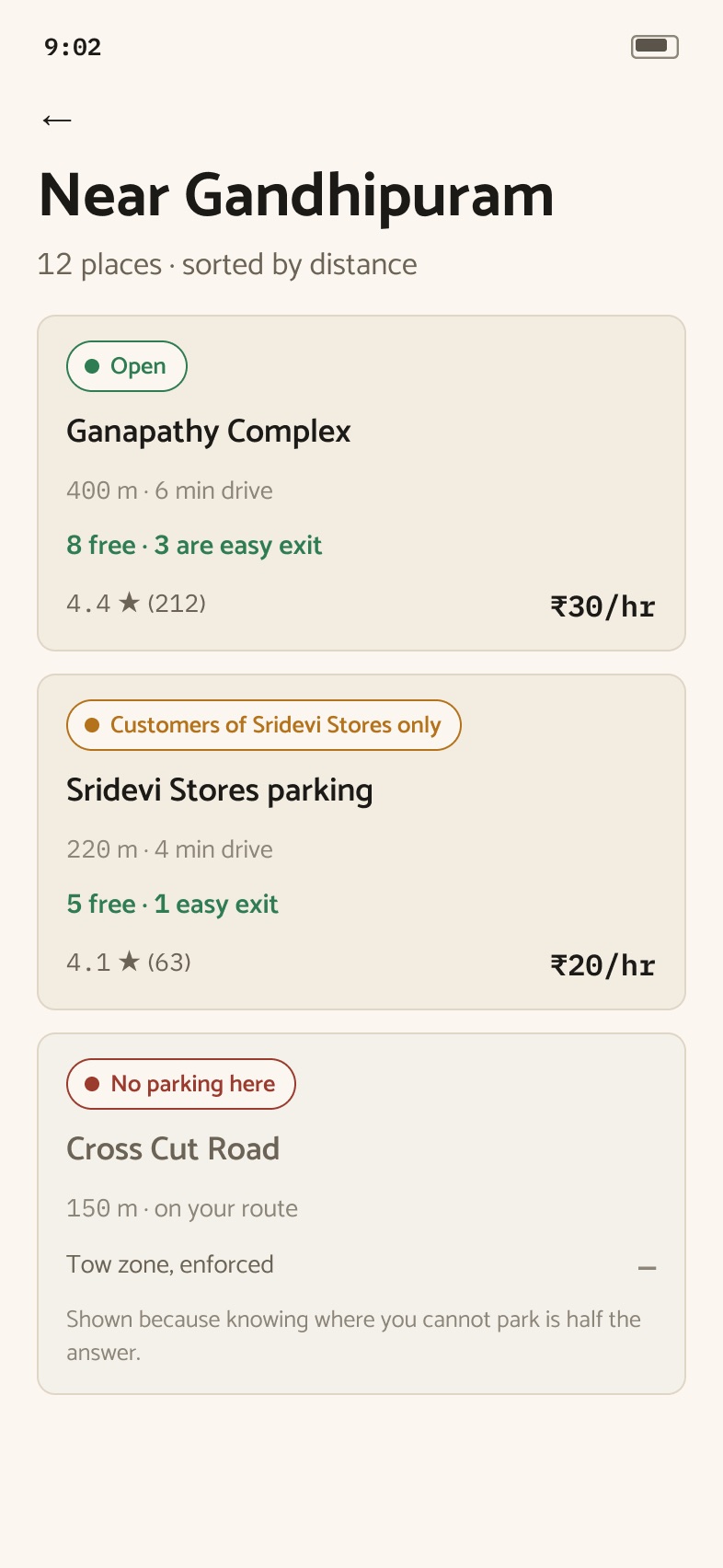
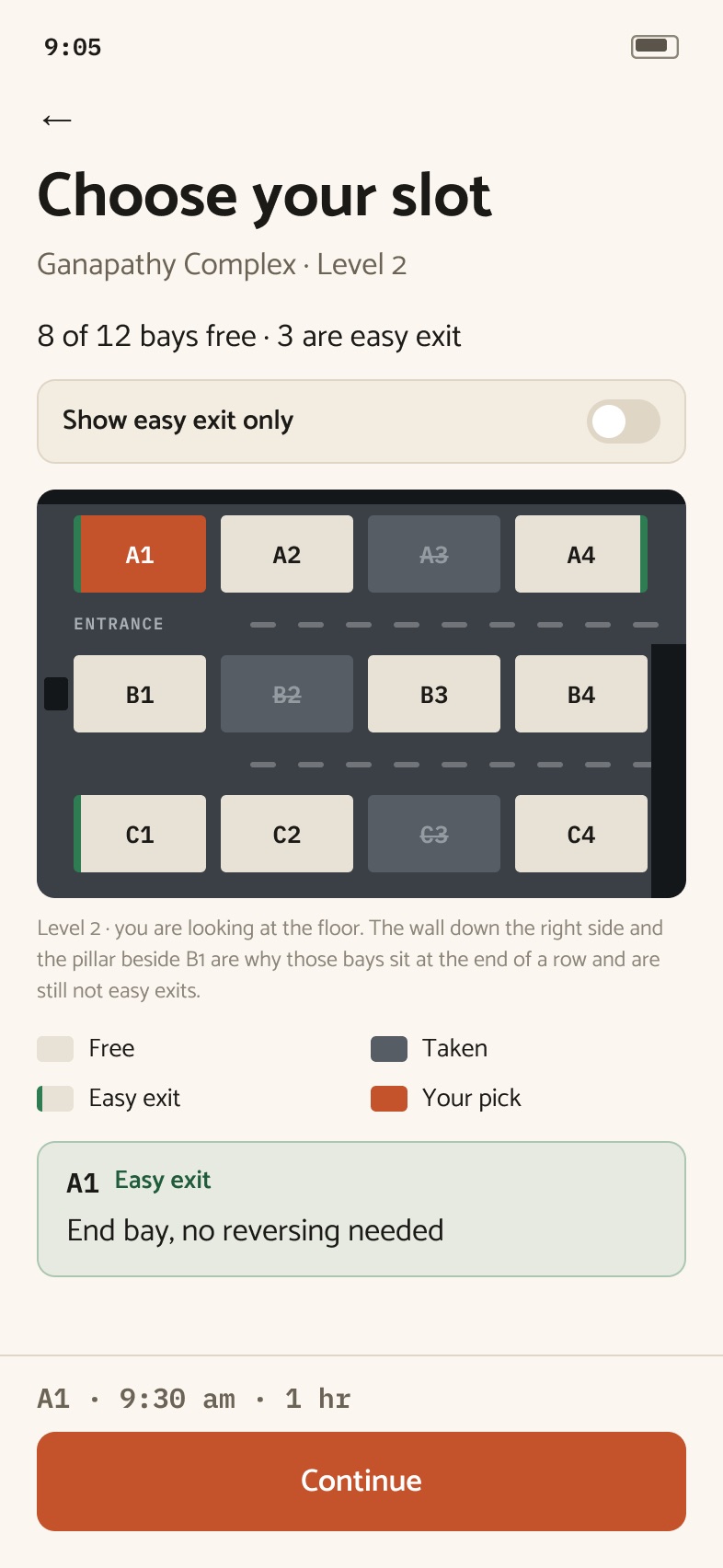
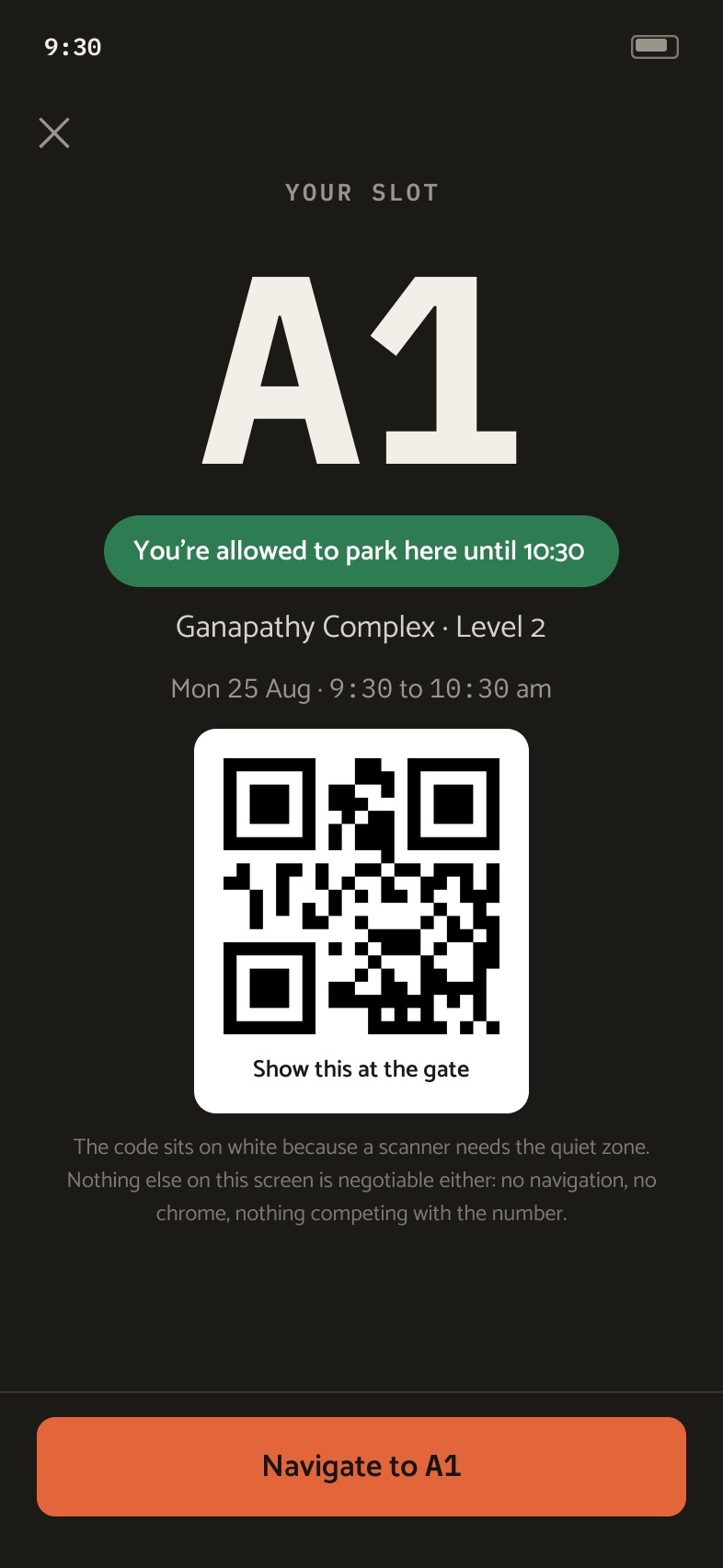
The research described permission, manoeuvring and vehicle-condition concerns that availability alone could not answer.
Permission enters the choice. Bay differences have a physical explanation. A blocked departure has a route to operator help.
Original priority screens and a web simulation exist. Customer usability, operator feasibility and live outcomes remain unvalidated.
01 / Revisit the evidence
The original coursework produced interviews, root-cause analysis, a conceptual model and a journey map. The early synthesis did discuss exit, largely through lanes, queues and the gate. The problem was not a missing stage; it was an incomplete interpretation.
A return to the source documents found accounts of reversing with another vehicle behind, difficulty seeing a bay boundary while parking, and vehicle damage. These are related concerns, but not every account is an exit incident. The boundary-visibility example should not be relabelled to fit a sharper story.
The research also described shop-specific restrictions and uncertainty about permission in unfamiliar places. An empty space might still be unavailable to that driver.
Whether a bay is vacant does not establish who is allowed to use it.
A uniform grid can hide differences in clearance and nearby obstructions.
Damage concerns invite investigation of a record and support process; they do not prove that photos prevent damage.
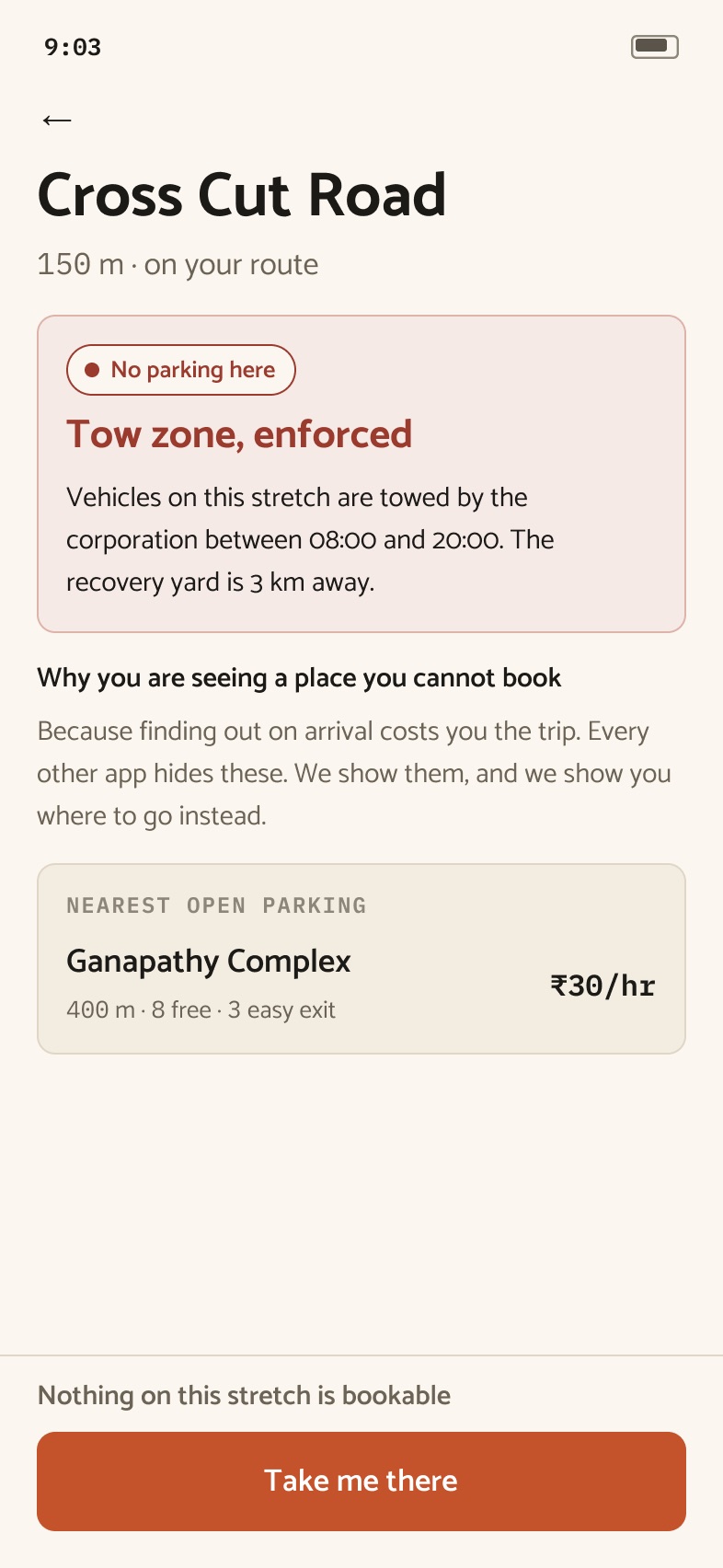
02 / Make rules part of choosing
The proposed results distinguish open, conditional and restricted parking, with the condition stated in words. Restricted places remain visible but cannot be booked. That could explain why a nearby space is not an option; it could also add clutter. Its usefulness needs testing.
The relevant condition appears at review and arrival as well. Each repetition serves a different task: choosing, checking the commitment and communicating with staff. A digital pass cannot itself grant permission; the service still depends on accurate rules and an operator who recognises them.
03 / Compare the alternatives
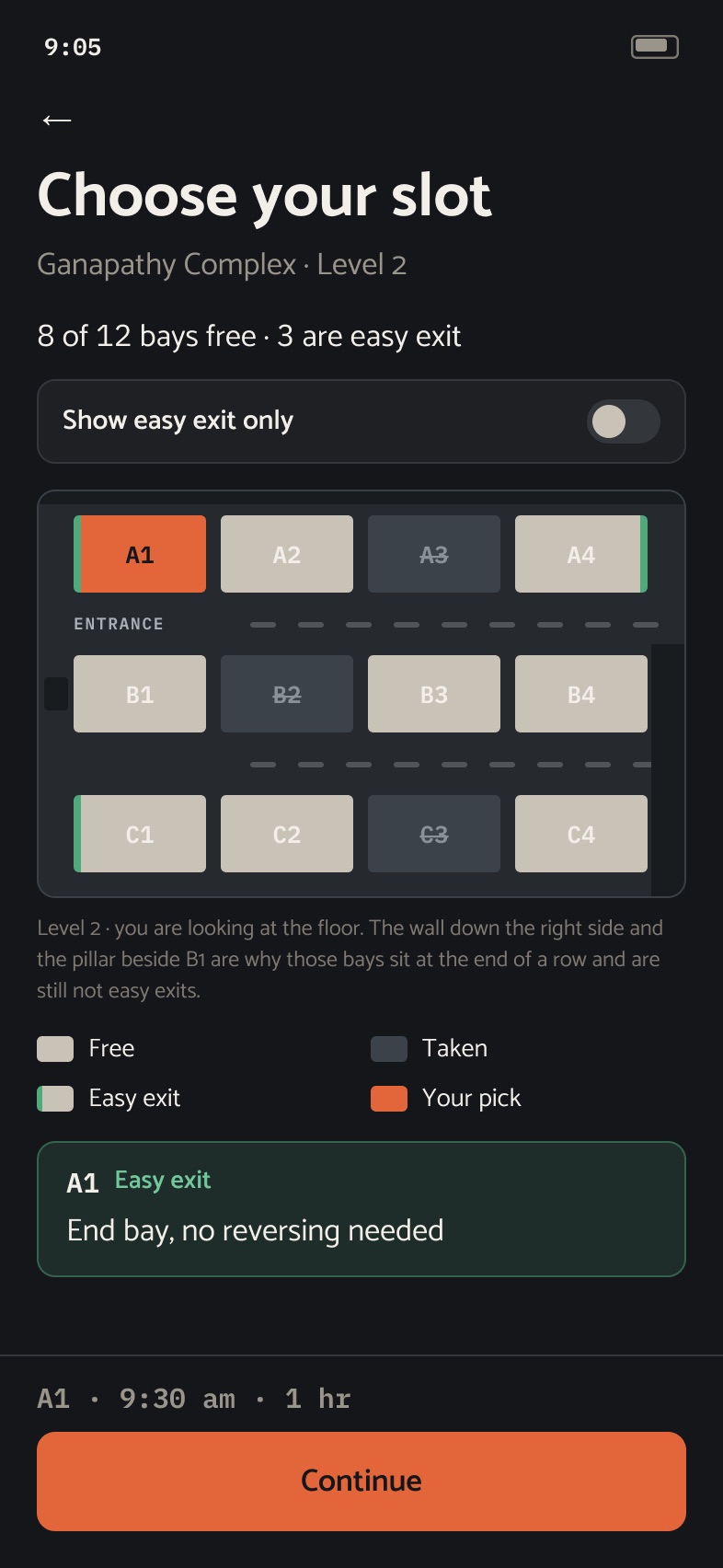
Two representations explored the same bay choice. Direction A uses an abstract grid with explicit attributes. Direction B adds the entrance, lanes, wall and pillar so the driver can inspect the physical reason behind a distinction.
Drawing the plan forced a question about B1. It sits at the end of a row, but a pillar constrains it. Being an end bay was not enough to justify calling it easy to leave. That was a design-development observation, not a usability finding.
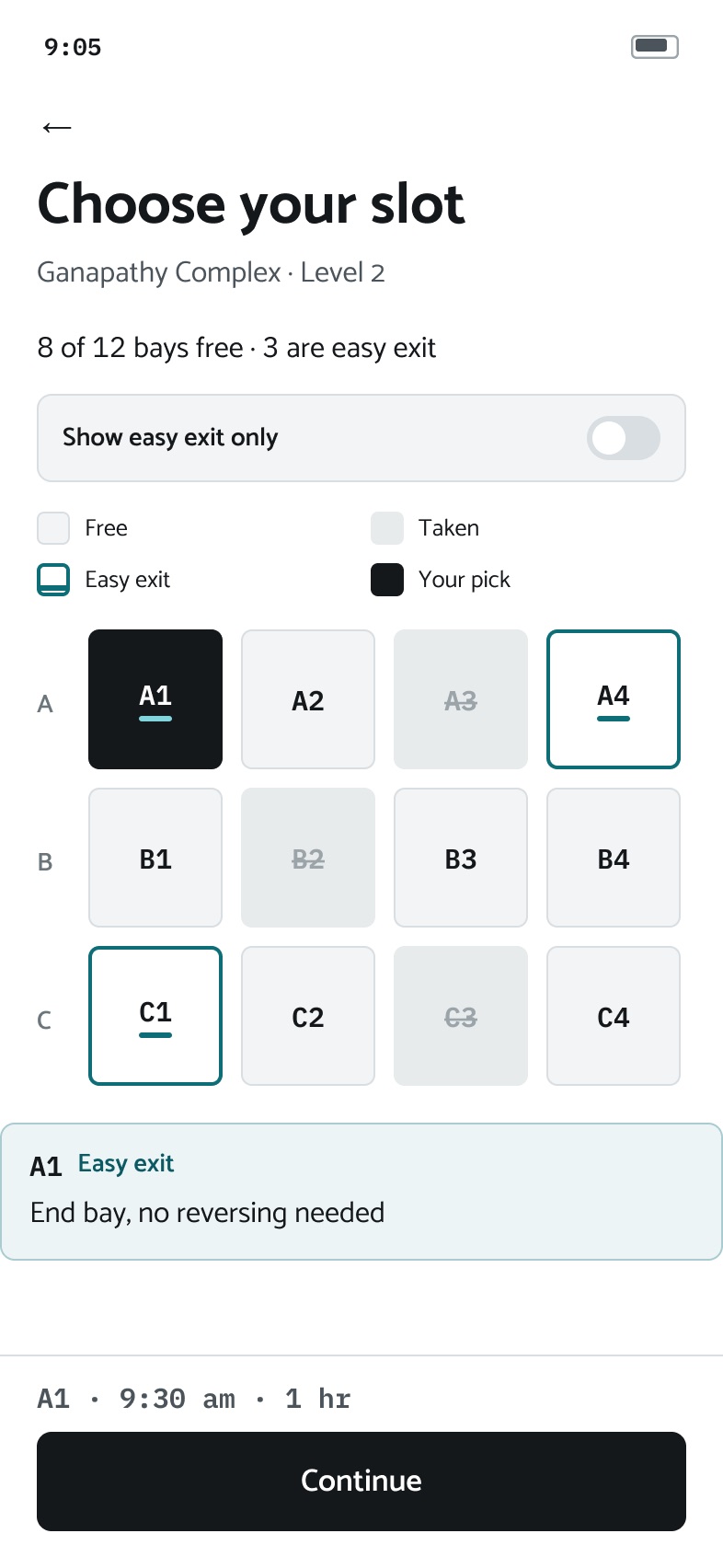
Retained for places without trustworthy floor geometry. It must explain the same attributes.
Preferred when geometry is available. The extra detail has to improve comprehension enough to justify maintaining it.
The current prototype offers both representations. If drivers choose for the same correct reasons in either, the simpler grid may be sufficient. If the distinction is misread as price, availability or an accessible bay, the encoding needs revision before adding more detail.
04 / Handle a changing choice
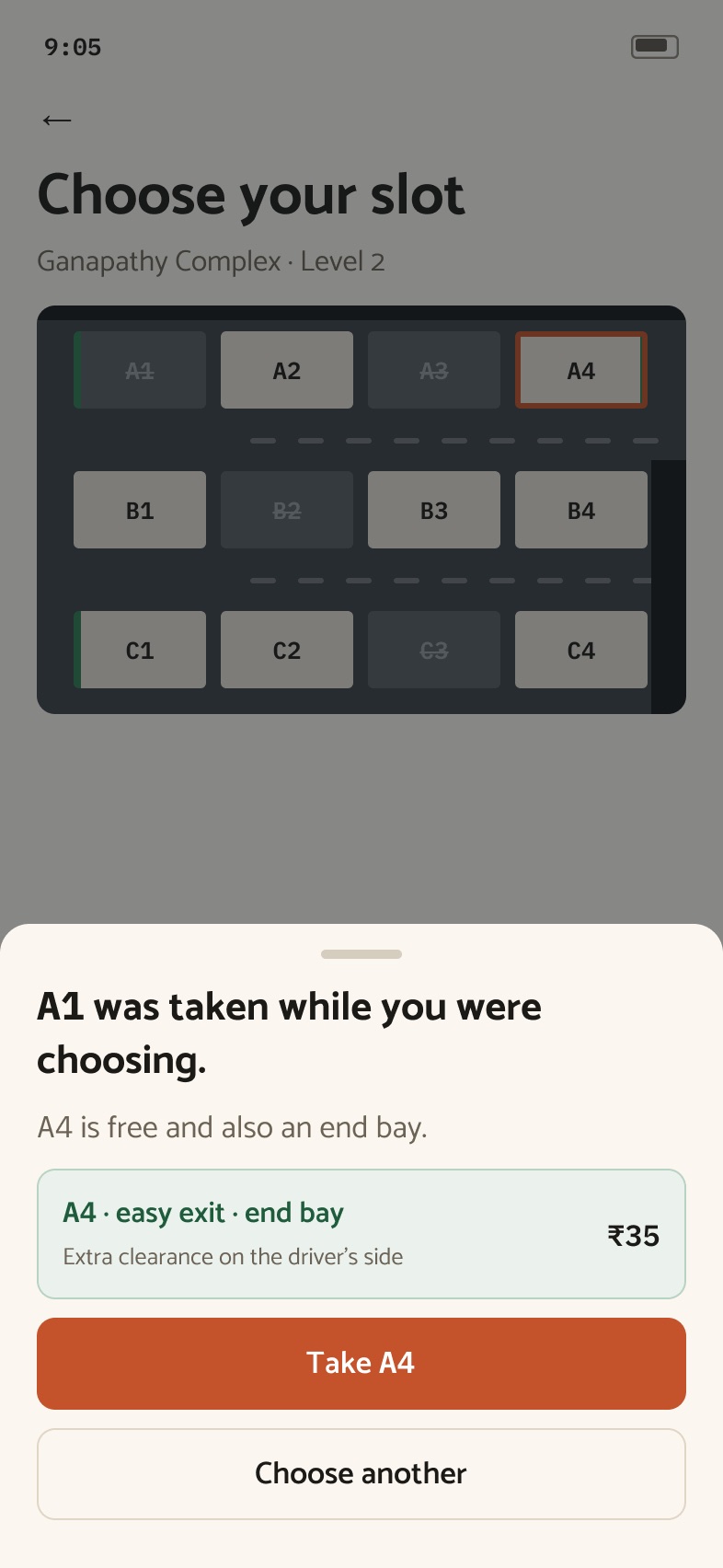
If a selected bay becomes unavailable, the proposed recovery looks for another available bay with the easy-exit attribute. The system should preserve why the driver chose it, rather than restarting the task without context.
The web model returns no suitable replacement when that attribute is unavailable. It must not invent a match or silently substitute a standard bay. Real inventory and reservation handling would need an authoritative service; this walkthrough simulates the conflict.
05 / Connect the screen to the service
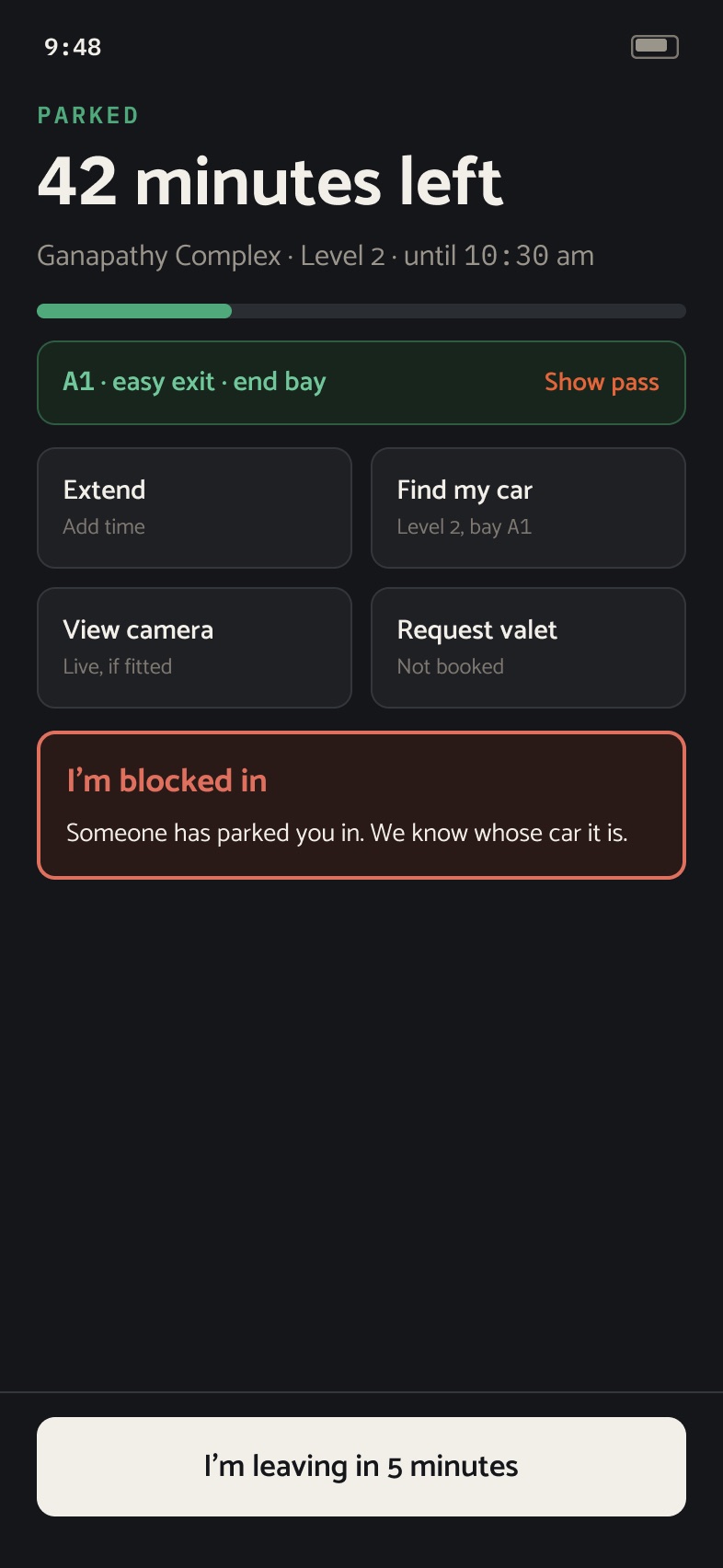
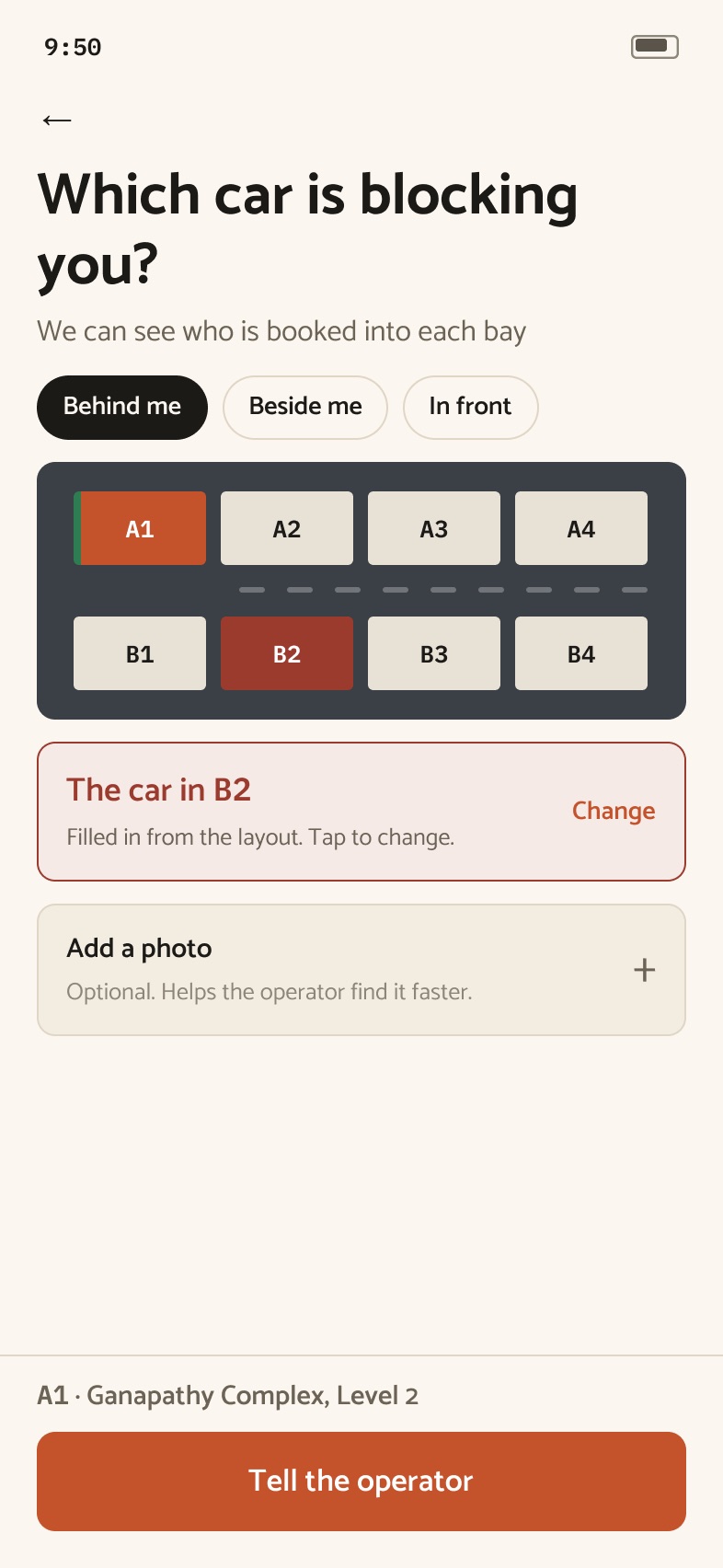
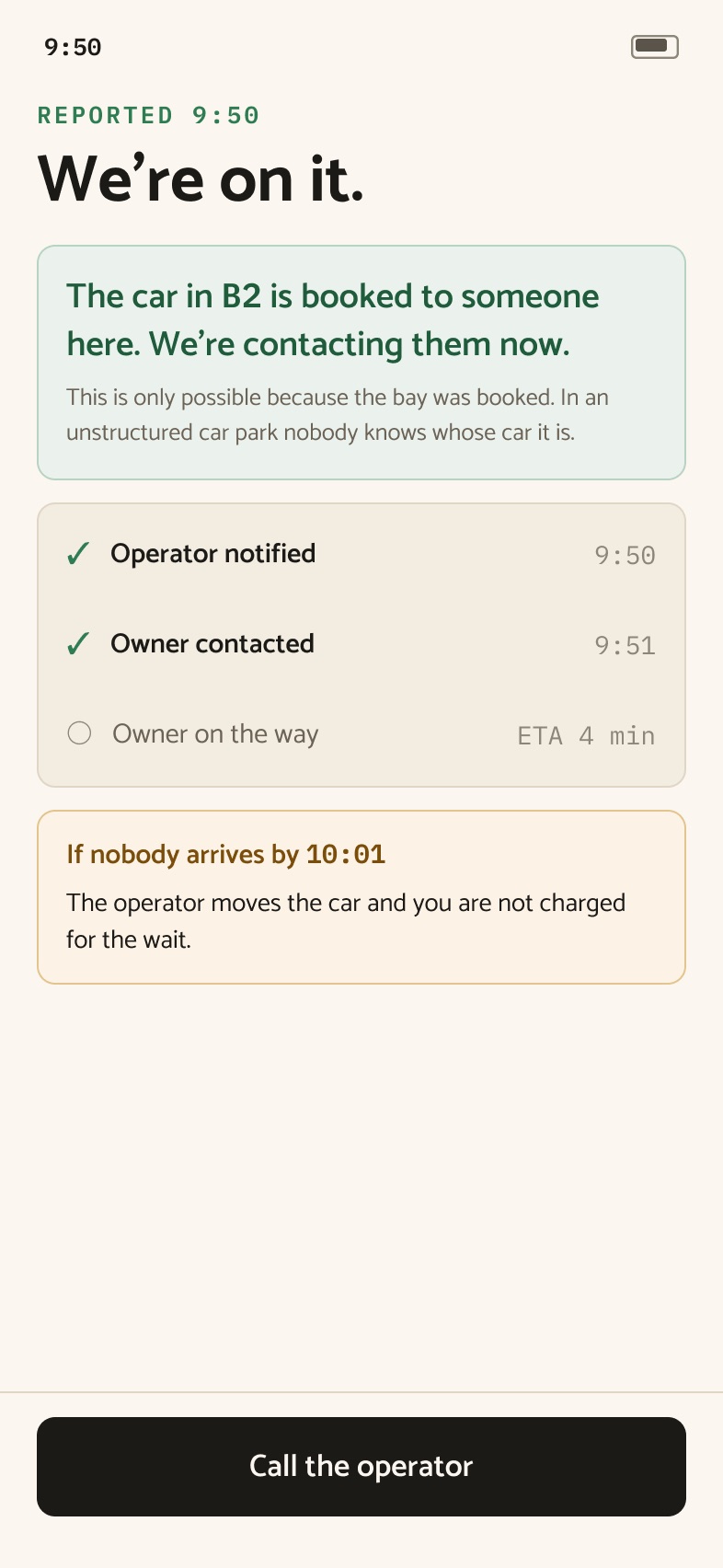
A driver blocked by another vehicle needs an actionable next step. The proposed flow attaches the location to a report for the operator. The operator side explains who would receive the issue and what they would need to act.
That makes the dependency visible: staff must be reachable, know enough about occupancy and have a practical response. The prototype’s reported state is not a promise that a vehicle has moved or that help will arrive within a particular time.
06 / Make the record usable
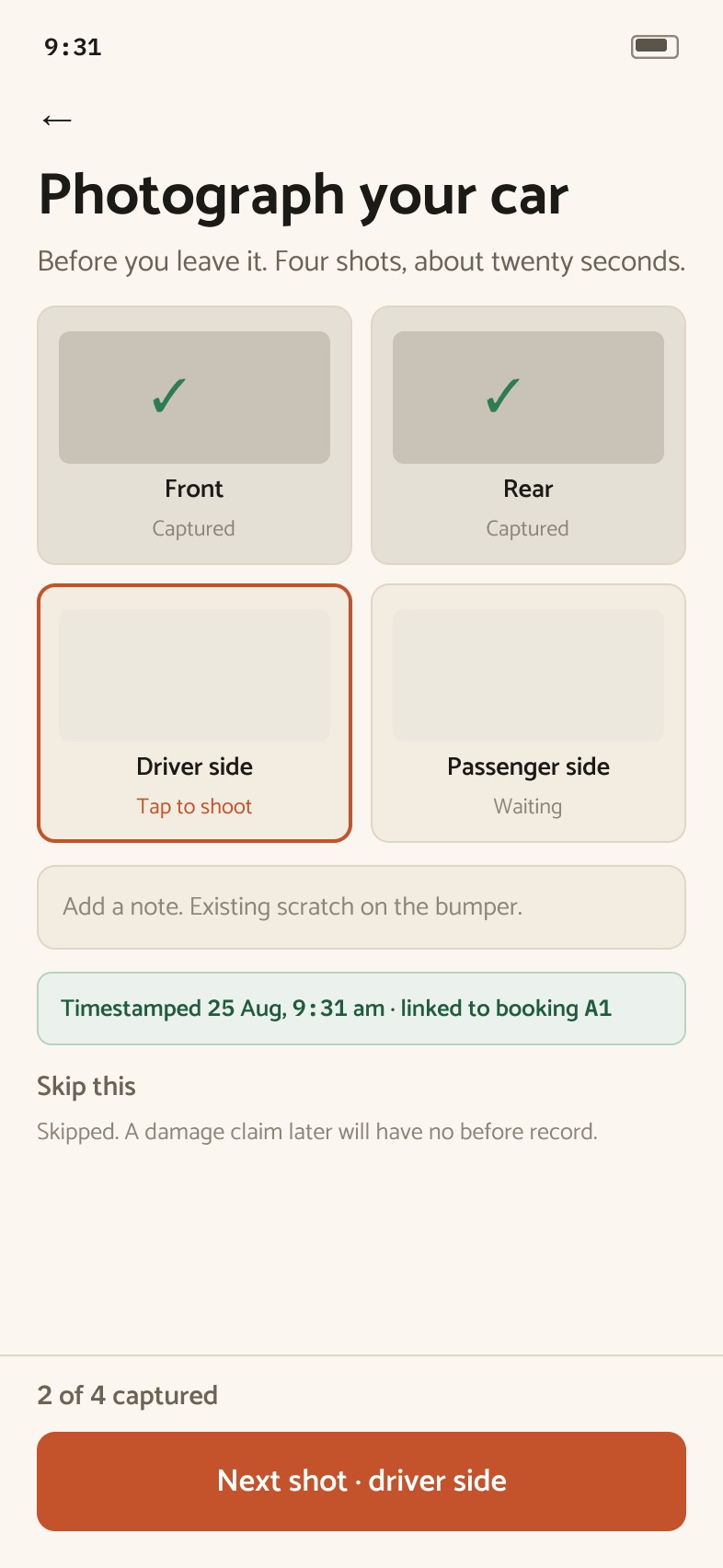
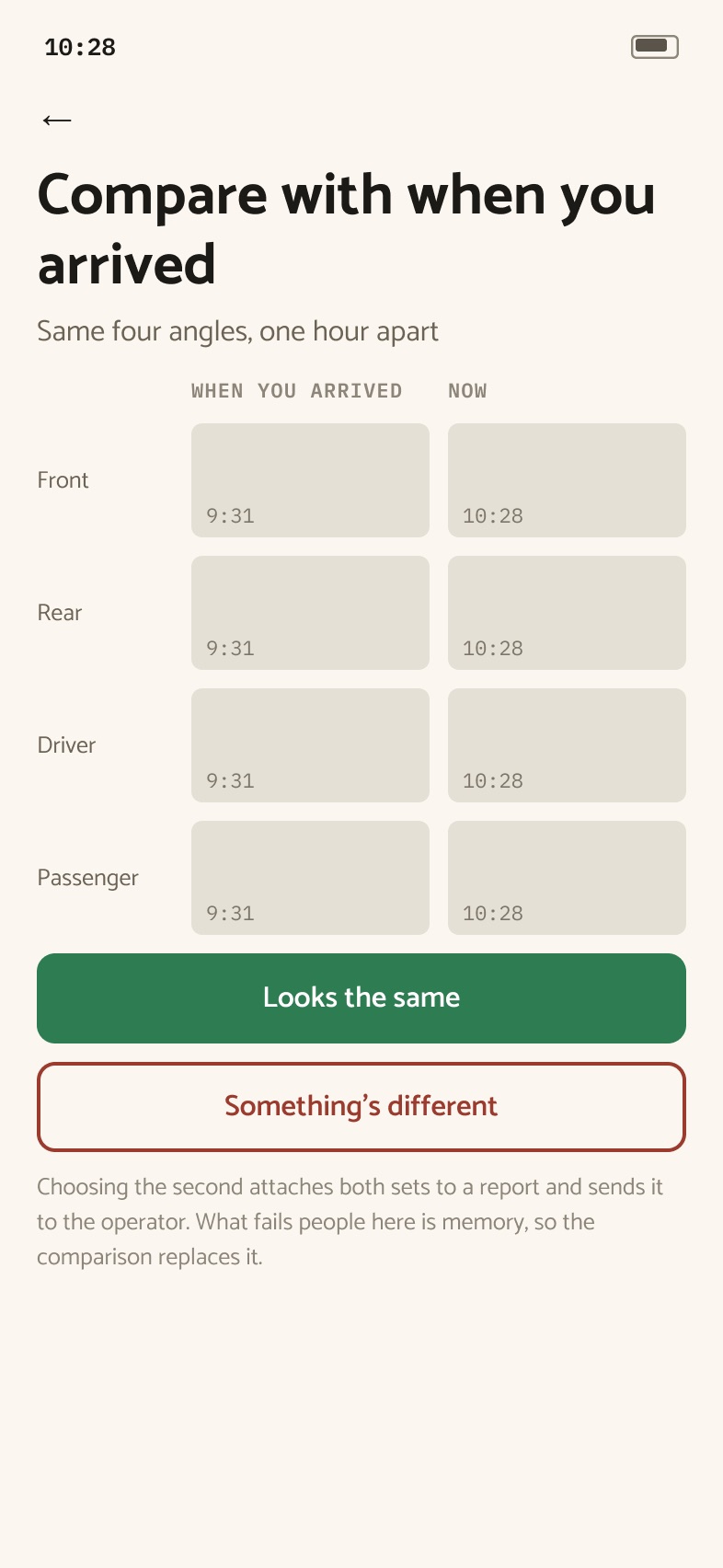
The proposed entry-and-exit condition record explores whether a comparison could help with uncertainty about damage. The source accounts support investigating the problem; they do not establish that drivers want this exact feature or that it settles responsibility.
The test protocol was revised before any sessions ran. Entry capture was inserted into the participant’s path instead of being narrated by the moderator. Otherwise, the exit task would ask them to rely on a record they had never created.
07 / State what remains open
The work has produced a clearer problem framing, alternative bay representations, original priority screens and an interactive simulation. These demonstrate design and implementation, not customer effectiveness.
The existing test plan targets bay comprehension, pass legibility, discovery of blocked-in help and use of condition comparison. Its scripts have been reconciled to remove inconsistent geography, mismatched permission scenarios and narration that would prime the comparison task.
Planned: three of five identify and correctly explain the distinction without prompting.
Planned: in four of five sessions, the participant shows the pass and the moderator reads slot and permission at four steps.
Planned: four of five find the action from active booking unaided.
Planned: three of five open comparison before judging. Requires the correct photographic stimulus.
No sessions have run. Driver testing also cannot validate staff operations, so operator interviews and a real-lot walkthrough remain separate requirements. Failures should change the design and become part of the case, rather than being explained away.
What the work achieved
The strongest progress is the correction from generic exit flow to permission and local physical constraints. The next proof is whether drivers understand the choices and operators can support the service.
Original coursework research was a team effort. The source canvas credits the original journey map and task-flow diagram to Raghul. This case focuses on subsequent design development and an AI-assisted web prototype; exact individual ownership of original artefacts must be confirmed before adding broader first-person claims. Original design images are shown as artefacts, not live parking information.
Next project
Have something in mind?